Table Lamp Size Guide: Height, Shade, and Proportion
Choose the right table lamp height and shade size for a console, side table, or sideboard, with practical US measurements and proportion checks.
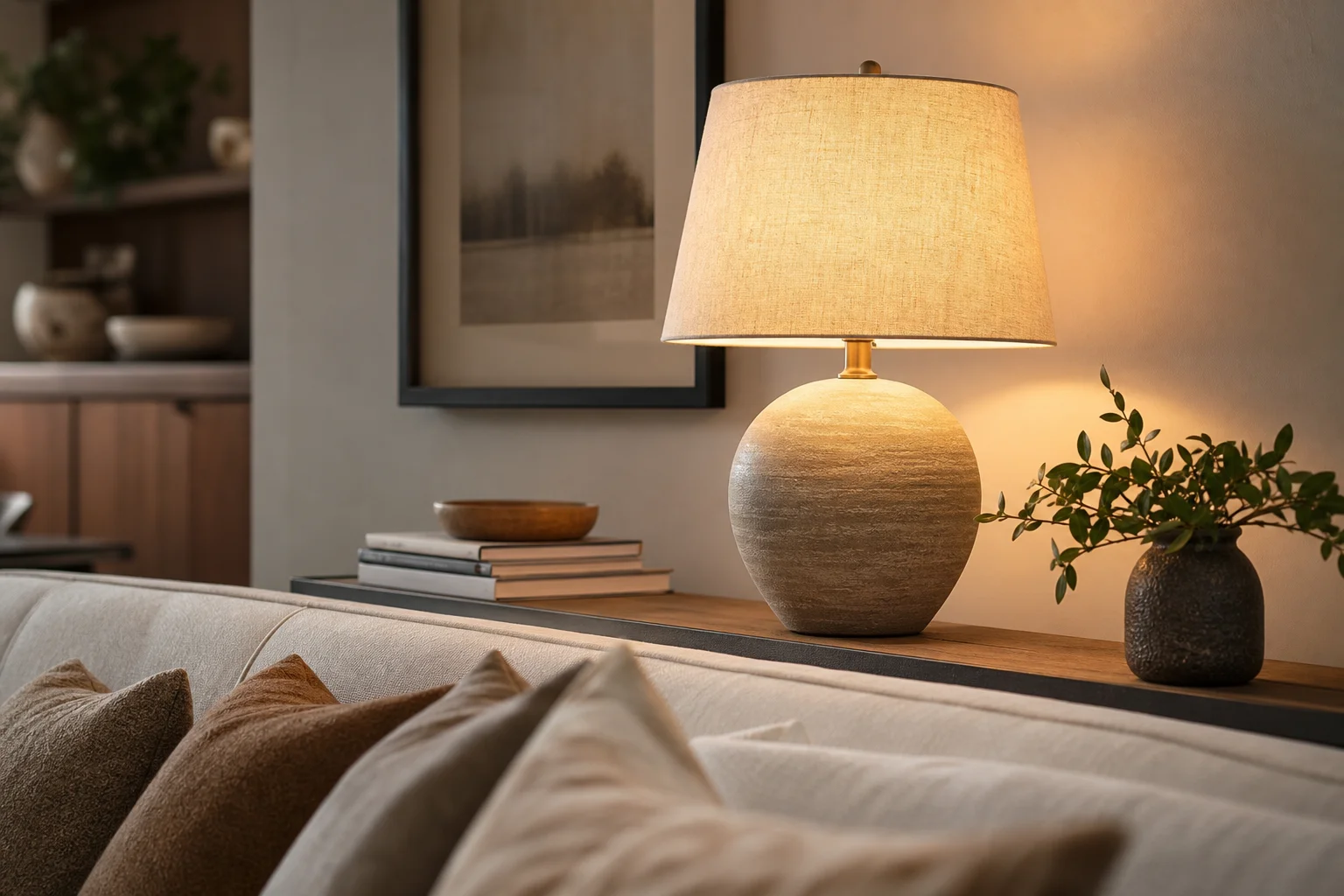
Table lamp sizing checklist
- Aim for about 24–34 inches of lamp height.
- Keep the shade bottom near seated eye level.
- Size the shade to about 1.5–2x the base width.
- Let the lamp use no more than a third of the surface.
- Choose a shade that gives the light quality you want.
The quick proportion rule
For a table lamp on a console or side table, a total height of roughly 24–34 inches suits many surfaces. A useful check is that the lamp and its table together reach somewhere near 58–64 inches, close to standing eye level, so the group feels balanced.
Treat these as starting points. A tall, narrow table needs a shorter lamp; a low side table can carry a taller one.
Match the lamp to the table height
Measure the surface height first, then choose a lamp that brings the combined height into a comfortable range. When seated nearby, the bottom of the shade should sit around eye level so the bulb stays hidden.
On a console behind a sofa, check the view from the seat: the shade should not glare into anyone’s eyes when they are settled.
Size the shade to the base and surface
A shade generally looks balanced when it is roughly one and a half to two times the width of the widest part of the base, and a little shorter than the base is tall. This keeps the lamp from looking top-heavy or undersized.
On the surface, the lamp should occupy no more than about a third of the table so there is still room for daily objects. Keep the base fully supported and away from the edge.
Plan pairs and groupings
Matching lamps on either side of a sofa or bed create a calm, symmetrical look. They do not have to be identical to a console lamp elsewhere in the room; a shared finish or shade color is enough to connect them.
When grouping a lamp with framed art or objects, vary the heights so the arrangement has a clear tallest point rather than several items competing at once.
Consider the light, not just the look
A wider, lighter shade spreads a softer, broader glow, while a narrow or dark shade concentrates light up and down. Choose the shade shape based on whether you want gentle ambient light or a more defined pool.
For reading beside the lamp, make sure the output and position put light on the page without shining into your eyes, and add a focused reading source if needed.
Frequently asked questions
How tall should a table lamp be?
For a console or side table, a total lamp height of roughly 24–34 inches suits many surfaces. A helpful check is that the lamp and its table together reach near 58–64 inches, close to standing eye level, so the group looks balanced.
How wide should a lamp shade be?
A shade usually looks balanced at roughly one and a half to two times the width of the widest part of the base, and a little shorter than the base is tall. This keeps the lamp from looking top-heavy or undersized.
Where should the bottom of the shade sit?
When you are seated near the lamp, aim for the bottom of the shade to sit around eye level so the bright bulb stays hidden from your normal line of sight.
Related lighting guides
- Bedside Lamp Size Guide: Height, Scale, and Placement
- How to Choose a Lampshade: Size, Shape, and Fit
- Ambient Lighting vs. Task Lighting
- Mushroom Lamp Placement Guide
Guidance is based on established residential-lighting conventions. Verify room measurements, local requirements, and product instructions before installation or use.