How to Choose a Lampshade: Size, Shape, and Fit
Measure and choose the right lampshade for a table or floor lamp, with practical size ratios, shape guidance, and fitting types explained in plain terms.
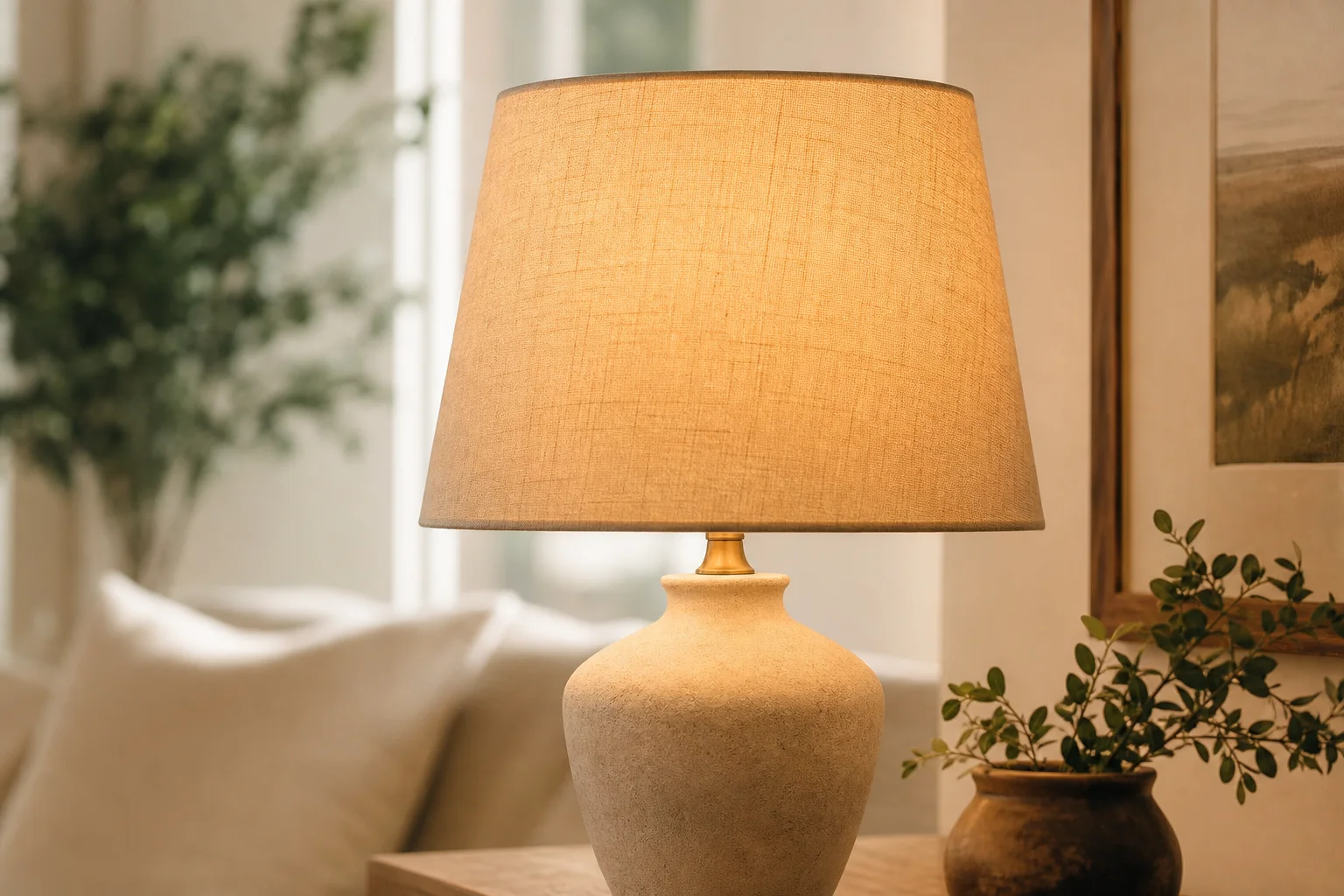
Lampshade selection checklist
- Shade width about 1.5–2x the base width.
- Shade height about two-thirds of the base height.
- Match top diameter, bottom diameter, and slant height.
- Confirm spider, Uno, or clip-on fitting.
- Pick material for the light spread you want.
The quick sizing rule
A shade generally looks balanced when its width is about one and a half to two times the width of the widest part of the lamp base, and its height is roughly two-thirds of the base height. These ratios keep a lamp from looking top-heavy or undersized.
Treat them as starting points. A wide, low base can carry a broader shade, while a tall, slim base usually looks best with a narrower one.
Measure a shade the right way
A shade has three measurements: the top diameter, the bottom diameter, and the slant height measured down the sloped side, not straight down the middle. Manufacturers list all three, so match them when replacing a shade.
To size a new shade, measure the lamp base width and the base height first, then apply the width and height ratios above before comparing candidate shades.
Choose a shape that suits the base
Empire shades taper from a narrow top to a wider bottom and suit traditional and transitional lamps. Drum shades keep a similar top and bottom diameter and suit modern and rounded bases. A tall, angular base often pairs well with a simple drum.
Rounded and sculptural bases usually look calmer under a clean drum or a gently tapered shade rather than a heavily detailed one.
Match the fitting type
The fitting is how the shade attaches. A spider fitting rests on a harp and is secured with a finial, an Uno fitting screws around the bulb socket, and a clip-on fitting clips directly onto the bulb. Confirm which one your lamp uses before buying.
Check the harp height too. A harp that is too tall or short changes how much of the bulb and base the shade covers, which affects both looks and glare.
Consider material and light output
A light-colored, translucent shade spreads a soft, broad glow and lets more light through the sides. A dark or opaque shade concentrates light up and down and creates a more defined pool, which suits accent placements more than general room light.
Always leave the shade clearance the lamp maker specifies around the bulb, and use a bulb within the fixture rating so the shade does not sit too close to heat.
Frequently asked questions
What size lampshade do I need?
As a starting point, choose a shade about one and a half to two times the width of the widest part of the lamp base, with a height around two-thirds of the base height. Adjust for a very wide or very tall base.
How do you measure a lampshade?
A shade has three measurements: the top diameter, the bottom diameter, and the slant height measured down the sloped side rather than straight down the middle. Match all three when replacing an existing shade.
What is the difference between a spider, Uno, and clip-on fitting?
A spider fitting rests on a harp and is held by a finial, an Uno fitting screws around the bulb socket, and a clip-on fitting clips directly onto the bulb. Confirm which one your lamp uses before buying a replacement shade.
Related lighting guides
- Table Lamp Size Guide: Height, Shade, and Proportion
- Bedside Lamp Size Guide: Height, Scale, and Placement
- Ambient Lighting vs. Task Lighting
Guidance is based on established residential-lighting conventions. Verify room measurements, local requirements, and product instructions before installation or use.