Ambient Lighting vs. Task Lighting
Understand ambient and task lighting, where each belongs, and how to combine them for comfortable rooms without glare.
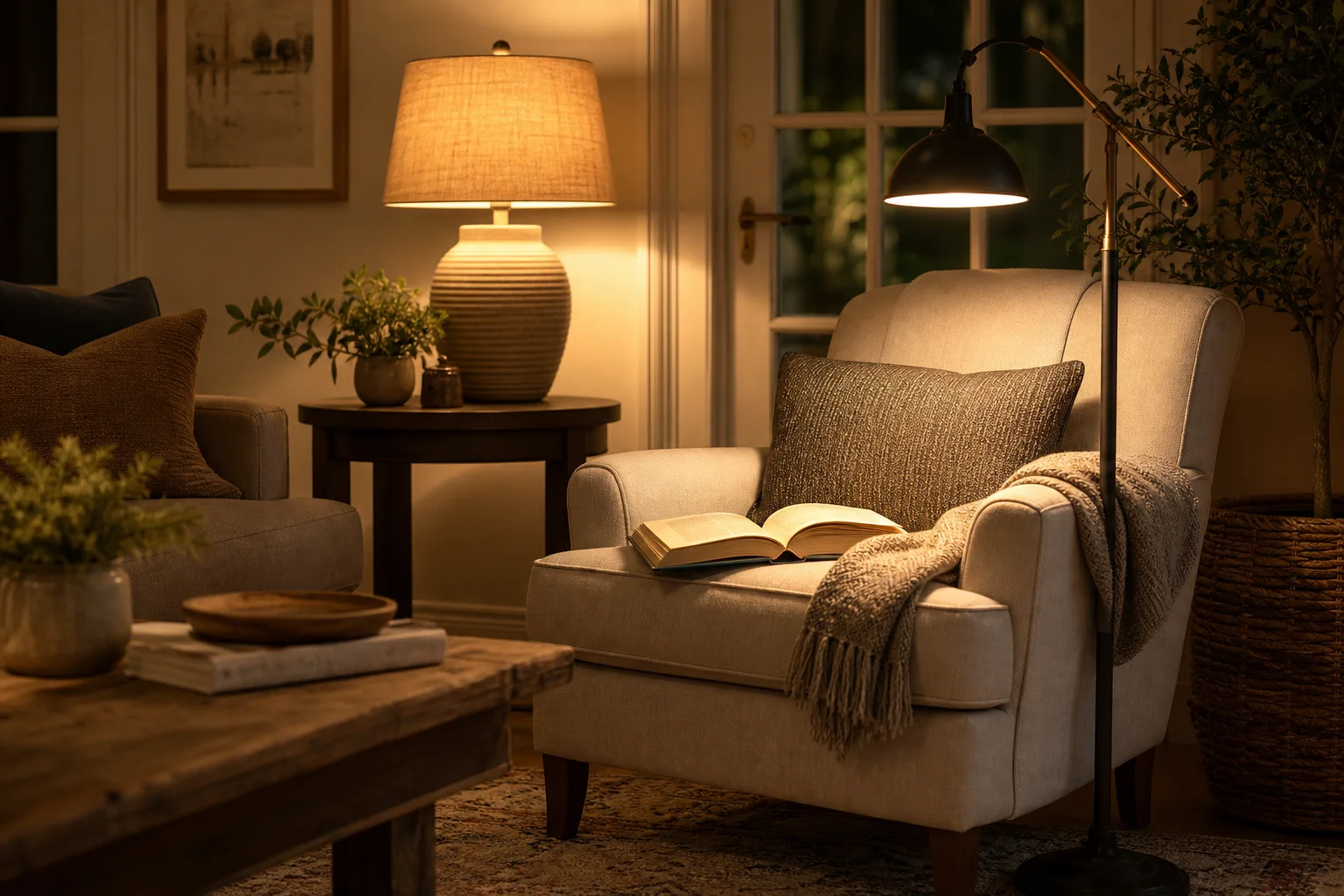
Choose the right lighting layer
- Ambient: overall visibility and atmosphere.
- Task: focused light for a specific activity.
- Give important tasks their own source.
- Shield bulbs from normal sightlines.
- Switch or dim layers independently.
The difference in one sentence
Ambient lighting provides general background brightness; task lighting directs more focused light onto an activity such as reading, cooking, or working.
Most comfortable rooms need both. Asking one ceiling fixture to provide every layer often creates glare and leaves work surfaces shadowed.
What counts as ambient lighting
Ceiling fixtures, wall sconces, floor lamps aimed upward, and shaded table lamps can all contribute ambient light. The goal is comfortable movement and an even sense of the room, not maximum brightness.
Place ambient sources at different heights and shield bare bulbs from normal sightlines.
What counts as task lighting
A reading lamp beside a chair, under-cabinet lighting over a counter, and a desk lamp aimed at paperwork are task sources. They should put light where the activity happens without shining into your eyes.
Position the source to the side opposite your writing hand to reduce hand shadows on a desk.
How to combine the two layers
Begin with a moderate ambient base, then add task light at the chair, desk, nightstand, or counter. Separately switched sources let the room adapt without over-lighting unused areas.
Keep color temperatures reasonably close unless there is a clear reason for contrast. Warm ambient light with slightly clearer task light can work when the transition is subtle.
Plan lighting room by room
In the living room, use floor or table lamps for background glow and a directed lamp for reading. In the bedroom, combine warm bedside atmosphere with focused reading light. In the kitchen, use general ceiling light plus counter and island task lighting.
After dark, sit and stand in the places you use. Check visible bulbs, screen reflections, and shadows before adding more output.
Frequently asked questions
What is the difference between ambient and task lighting?
Ambient lighting provides general background brightness so you can move around a room comfortably. Task lighting directs more focused light onto a specific activity such as reading, cooking, or working. Most comfortable rooms use both.
Do I need both ambient and task lighting?
Usually, yes. Asking one ceiling fixture to provide every layer often creates glare and leaves work surfaces shadowed. Start with a moderate ambient base, then add task light at the chair, desk, nightstand, or counter, each switched separately.
Related lighting guides
- Mushroom Lamp Placement Guide
- How to Make a Room Feel Warmer After Dark
- Warm vs. Cool Light for a Bedroom
Guidance is based on established residential-lighting conventions. Verify room measurements, local requirements, and product instructions before installation or use.