How to Make a Room Feel Warmer After Dark
Create a warmer room after sunset with layered light, lower lamp placement, dimming, and practical color-temperature choices.
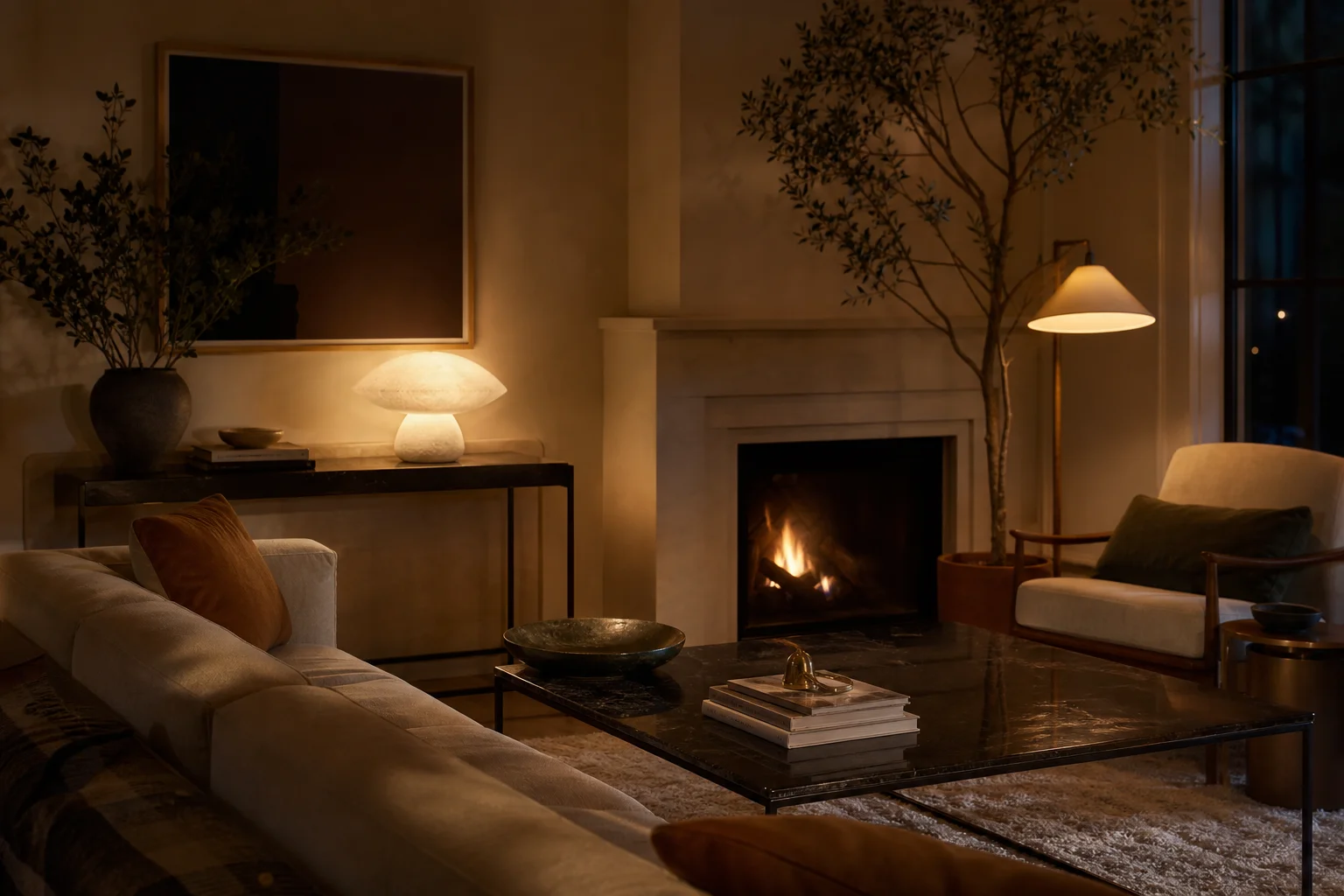
A warmer room checklist
- Switch off unnecessary overhead lights.
- Add light at two or more heights.
- Choose roughly 2200K–3000K.
- Shield visible bulbs and reflections.
- Dim the brightest source first.
Build light below the ceiling
Turn off unnecessary overhead fixtures and add light at table, shelf, or floor-lamp height. Lower sources create depth and keep the brightest point closer to where people relax.
Start with one lamp near the seating area, then add another only if a dark corner or activity needs it.
Use a warm color temperature
Choose roughly 2200K–2700K for a relaxed evening glow, or 2700K–3000K when you need more visual clarity. Keep nearby sources in a similar range so the room feels intentional.
Warm color alone cannot fix glare. Shield visible bulbs and reduce excessive brightness at eye level.
Bounce light off walls and textures
Place a lamp near a light-colored wall, curtain, or textured surface so the glow spreads indirectly. Reflected light generally feels softer than a bare source pointed into the room.
Leave manufacturer-recommended clearance around shades and warm bulbs. Do not crowd a fixture against fabric.
Balance brightness with dimming
Dim the brightest source first, then increase local task lighting only where needed. This reduces stark bright-to-dark transitions without making the entire room flat.
Use only bulbs and controls rated to work together. If a lamp has built-in dimming, follow its stated bulb requirements.
Make a five-minute evening adjustment
At sunset, close reflective blinds, switch on lower lamps, and check the room from the seats you use most. Move a lamp a few inches if you can see the bulb or a hard reflection.
A compact sculptural lamp can add a restrained pool of ambient light on a console or side table without becoming the room’s only source.
Related lighting guides
Guidance is based on established residential-lighting conventions. Verify room measurements, local requirements, and product instructions before installation or use.