How Many Lumens Do You Need? A Room-by-Room Guide
Understand lumens versus watts and find practical brightness targets for a bedroom, living room, kitchen, and bathroom, with tips on layering and dimming.
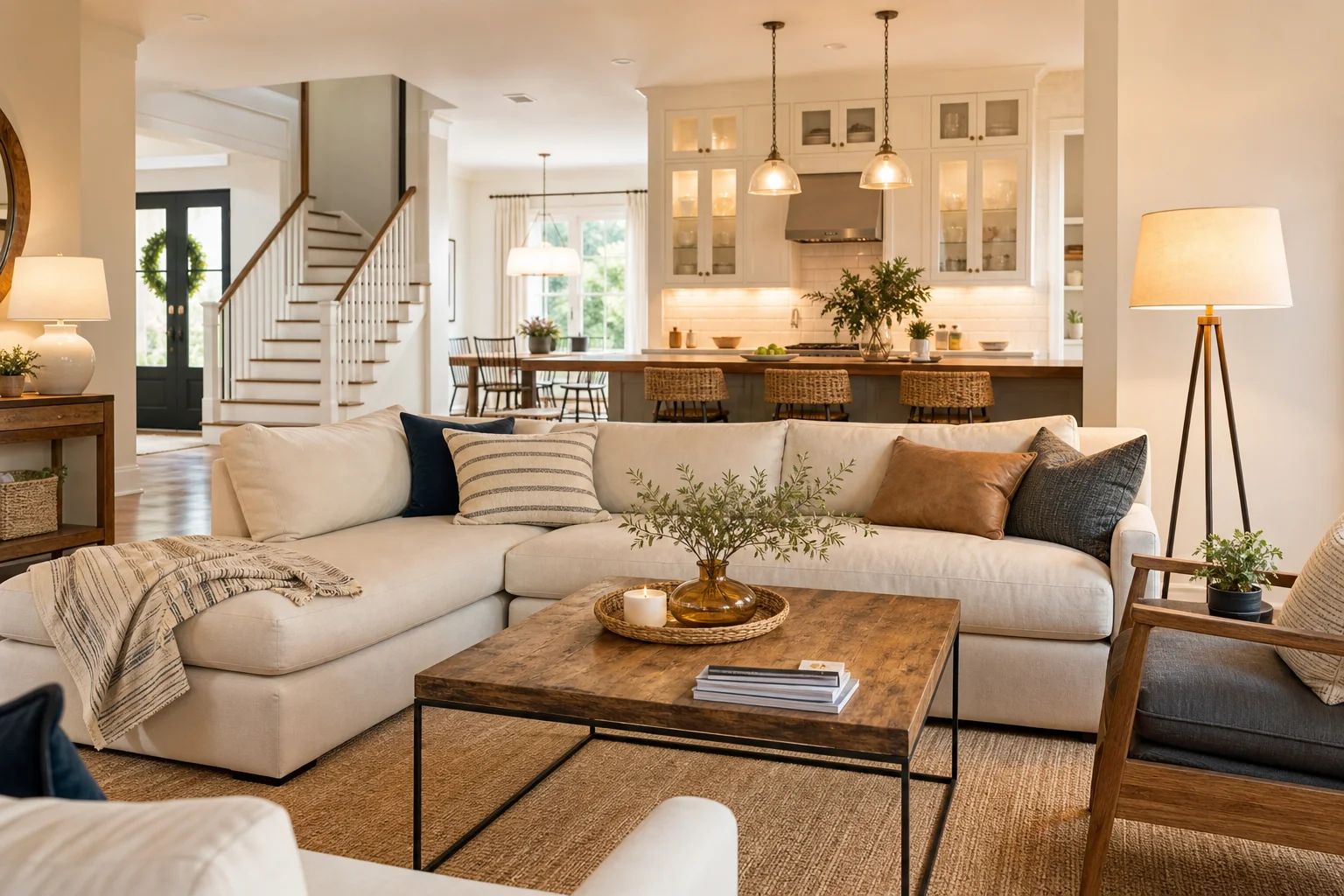
Room brightness checklist
- Read lumens on the package, not watts.
- Bedroom and living room: about 1500–3000 lumens total.
- Kitchen: about 4000–6000 lumens for task work.
- Spread the total across several fixtures.
- Choose dimmable sources and size up, then dim down.
Lumens measure brightness, not watts
Lumens describe how much visible light a bulb produces, while watts describe how much energy it uses. With LED bulbs, a low wattage can still deliver high brightness, so read the lumen figure on the package rather than the watt number.
As a rough reference, a traditional 60-watt incandescent bulb produced roughly 800 lumens. A 100-watt incandescent produced roughly 1600 lumens. Use those familiar points to translate old habits into lumen targets.
Practical brightness targets by room
These are total, layered targets for a room of average size, spread across several fixtures rather than one bulb. A bedroom often feels comfortable around 1500–3000 lumens total, a living room around 1500–3000, a kitchen around 4000–6000 for clear task work, and a bathroom around 4000–5000 near the mirror.
Larger rooms, dark wall colors, and tall ceilings need more output; small rooms and light walls need less. Treat these ranges as starting points and adjust after living with the light for a few evenings.
Spread the total across layers
Reaching a lumen target with a single bright ceiling fixture usually creates glare and flat, shadowless light. Divide the total among ambient, task, and accent sources at different heights so the room feels even and comfortable.
For example, a living room might combine a ceiling fixture, one or two table lamps, and a floor lamp near a reading chair rather than one powerful downlight.
Add extra light where you work
Task areas need more focused output than the surrounding room. A kitchen counter, a desk, a workbench, or a bathroom mirror benefits from dedicated light aimed at the surface so you are not working in your own shadow.
Position task sources to the side rather than directly behind you, and keep the bulb screened from your normal sightline to reduce glare.
Use dimming to right-size brightness
A dimmable source lets one room serve both bright daytime tasks and a soft evening mood. Buy toward the higher end of a lumen range and dim it down, rather than installing a dim fixture you can never make brighter.
Confirm that the bulb and control are rated to work together. Some bulbs shift color or flicker on incompatible dimmers, so check the packaging before buying.
Frequently asked questions
How many lumens do I need for a bedroom?
A bedroom often feels comfortable around 1500–3000 lumens total, spread across several softer sources rather than one bright ceiling fixture. Warm color temperatures around 2200K–2700K suit evening use.
How many lumens do I need for a living room?
A living room of average size usually works well around 1500–3000 lumens total. Divide that among a ceiling fixture, table lamps, and a floor lamp so the light feels even and layered.
How many lumens does a kitchen need?
Kitchens need brighter, more focused light for safe task work, often around 4000–6000 lumens total, with extra dedicated light aimed at counters and the sink so you are not working in your own shadow.
Are lumens or watts more important?
Lumens. Lumens measure how much light a bulb produces, while watts measure energy use. With LED bulbs a low wattage can still be very bright, so compare the lumen figures when choosing bulbs.
Related lighting guides
- Ambient Lighting vs. Task Lighting
- Dimmable LED Bulbs: How to Avoid Flicker and Buzz
- How to Make a Room Feel Warmer After Dark
Guidance is based on established residential-lighting conventions. Verify room measurements, local requirements, and product instructions before installation or use.