Light Bulb Color Temperature Guide (Kelvin)
Understand light bulb color temperature and the Kelvin scale, with practical recommendations for every room from warm 2700K to daylight 5000K.
Color temperature checklist
- Read the Kelvin number on the package.
- Bedrooms and living rooms: about 2200K–3000K.
- Kitchens and bathrooms: about 3000K–4000K.
- Workshops and focused work: about 4000K–5000K.
- Match color temperature for bulbs seen together.
What color temperature means
Color temperature describes how warm or cool a light looks, measured in Kelvin (K). Lower numbers look warmer and more amber, while higher numbers look cooler and bluer. It is printed on most bulb packaging next to the lumen figure.
Color temperature is separate from brightness. A warm bulb and a cool bulb can be equally bright, so choose color and lumens as two different decisions.
The common ranges
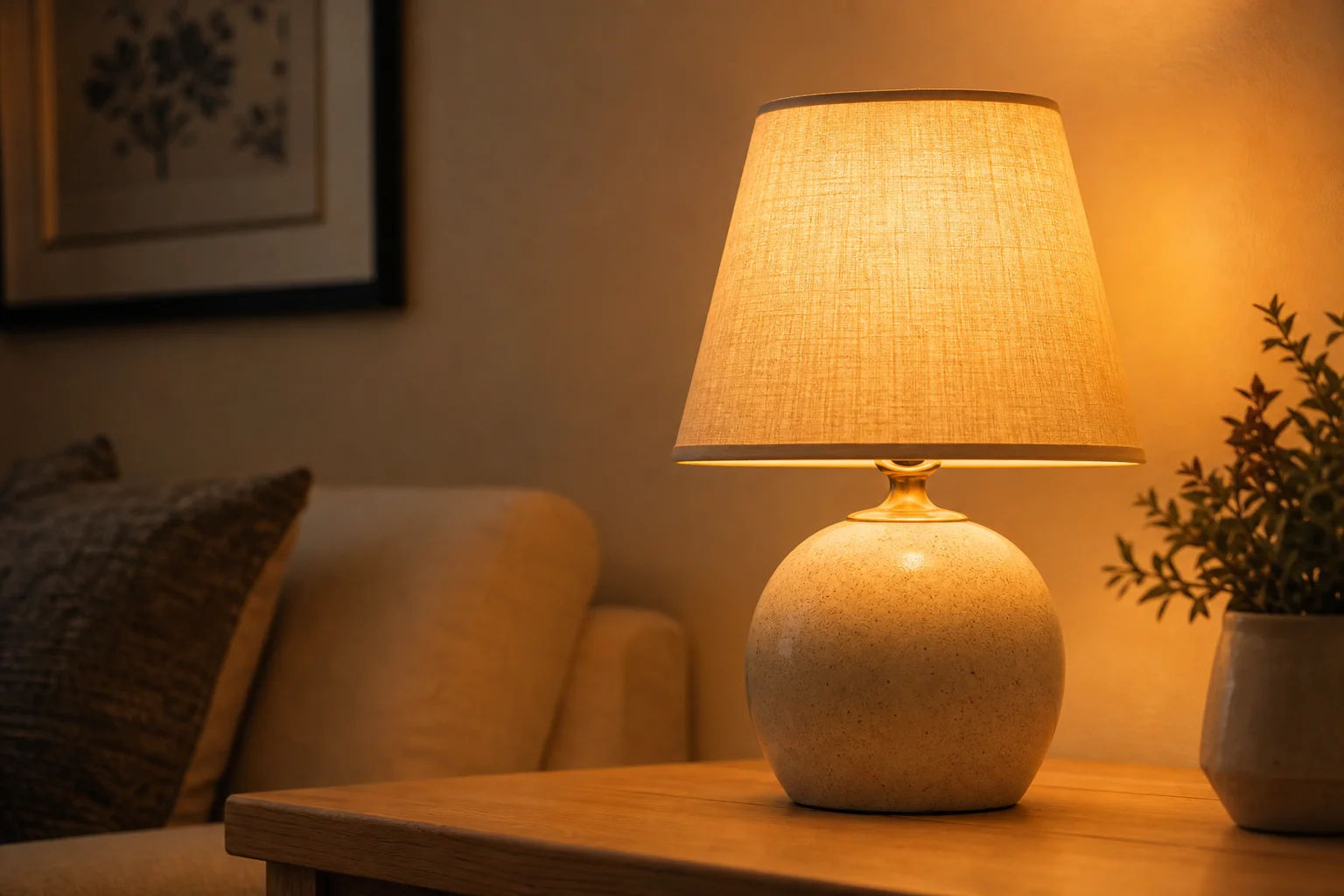
Roughly, 2200K–2700K is a warm, relaxed glow like candlelight or a traditional bulb; 3000K is warm white; 3500K is neutral; 4000K is cool white; and 5000K–6500K is daylight, which looks crisp and blue-white.
Most homes use warmer light in living and sleeping spaces and neutral-to-cool light in work areas, though personal preference matters.
What to choose by room
For bedrooms and living rooms, 2200K–3000K feels calm and inviting. For kitchens and bathrooms, 3000K–4000K balances warmth with clear task visibility. For a garage, workshop, or focused office, 4000K–5000K can feel alert and precise.
When in doubt in living spaces, 2700K is a safe, widely liked warm white. Save daylight-colored bulbs for utility spaces unless you specifically prefer a cooler look.
Keep it consistent
Use the same color temperature for bulbs seen together in one room so one side does not look noticeably warmer or cooler than the other. Mixing colors in a single space usually looks unintentional.
Brands can vary slightly in appearance even at the same stated Kelvin, so matching bulb brand and model within a room helps.
Test before committing
Paint, wood, bedding, and daylight all change how a bulb looks in your space. Test one bulb at night before replacing every source in a room.
If white walls look too yellow for your taste at 2700K, step up to 3000K rather than jumping straight to a cool 4000K, which can feel clinical in a living space.
Frequently asked questions
What is the best light bulb color temperature for a home?
For most living and sleeping spaces, a warm 2700K is a widely liked choice. Use 3000K–4000K in kitchens and bathrooms for clearer task light, and reserve daylight 5000K bulbs for garages, workshops, or focused work areas.
What does Kelvin mean on a light bulb?
Kelvin (K) measures color temperature, or how warm or cool the light looks. Lower numbers like 2700K look warm and amber, while higher numbers like 5000K look cool and blue-white. It is separate from brightness, which is measured in lumens.
Is 2700K or 3000K better?
Both are warm whites. 2700K is a little cozier and more amber, ideal for bedrooms and relaxed living rooms, while 3000K is slightly crisper and works well where you want warmth with a touch more clarity, such as a kitchen or reading area.
What color temperature is daylight?
Daylight bulbs are usually around 5000K–6500K, producing a crisp, blue-white light. It suits utility spaces and detailed tasks but can feel clinical in living rooms and bedrooms, where warmer light is generally more comfortable.
Related lighting guides
- Warm vs. Cool Light for a Bedroom
- How Many Lumens Do You Need? A Room-by-Room Guide
- Dimmable LED Bulbs: How to Avoid Flicker and Buzz
Guidance is based on established residential-lighting conventions. Verify room measurements, local requirements, and product instructions before installation or use.