LED vs. Incandescent Bulbs: Which Should You Choose?
Compare LED and incandescent light bulbs on energy use, lifespan, brightness, light quality, and cost, with plain guidance on choosing the right bulb.
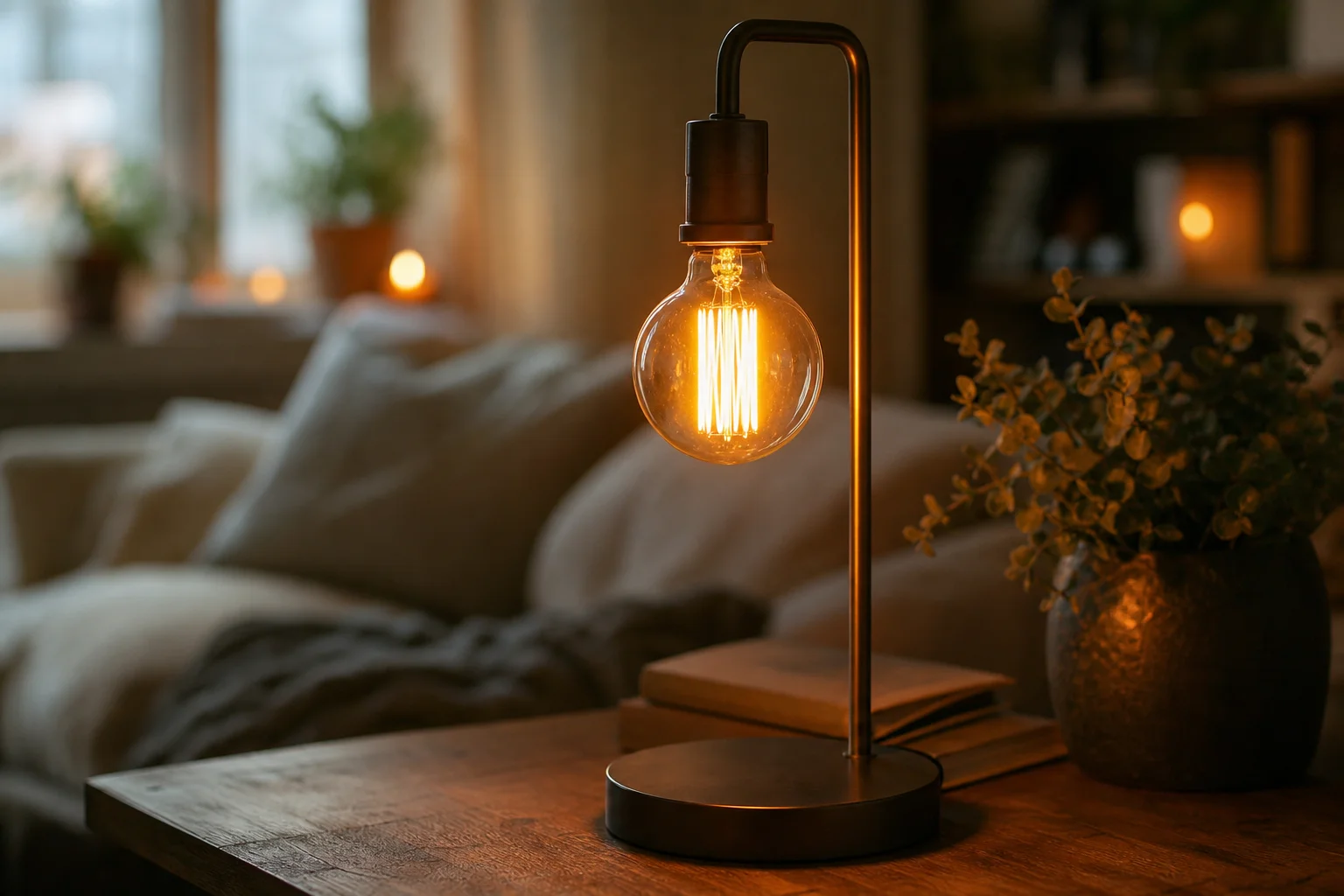
LED vs. incandescent checklist
- Choose LED for everyday fixtures to save energy.
- Compare lumens, not watts, when switching.
- Pick about 2700K to match the incandescent look.
- Check the rated lifespan and color rendering.
- Buy dimmable LEDs and an LED dimmer if you dim.
The quick answer
For almost all household lighting, LED bulbs are the practical choice: they use far less energy, last much longer, and now come in warm colors that closely match the look people liked about incandescent bulbs.
Incandescent bulbs still produce a familiar warm glow, but their high energy use and short lifespan make them hard to justify for everyday fixtures.
Energy use and running cost
LEDs convert far more of their energy into light rather than heat, so a bright LED may use roughly 80–90 percent less power than an incandescent of the same brightness. Over a year, that difference adds up across a whole home.
Because LEDs run cooler, they also add less heat to a room, which can matter in warm climates and in enclosed fixtures.
Lifespan and replacement
An incandescent bulb often lasts around 1,000 hours, while a quality LED is typically rated for many thousands of hours. Fewer replacements means less hassle for hard-to-reach fixtures.
Look for the rated lifespan on the package, and keep in mind that very cheap LEDs can fall short of their claims, so a reputable bulb is worth it in fixtures you use daily.
Light quality and brightness
Compare lumens, not watts, when switching. A traditional 60-watt incandescent produced roughly 800 lumens, so look for an LED with a similar lumen figure. Choose a warm color around 2700K to match the classic incandescent look.
Color rendering describes how true colors look under a bulb. A higher color-rendering rating gives more natural-looking skin tones and decor, which is worth checking for living areas.
Dimming and compatibility
Not every LED dims, so buy bulbs marked dimmable and pair them with an LED-rated dimmer if you want to dim. Standard LEDs on an old incandescent dimmer can flicker or buzz.
For fixtures you never dim, a standard LED is fine. For fixtures with existing dimmers, check the bulb and dimmer compatibility before buying.
Frequently asked questions
Are LED bulbs better than incandescent?
For almost all household lighting, yes. LEDs use far less energy, last many times longer, and now come in warm colors that closely match incandescent light. Incandescent bulbs give a familiar glow but their high energy use and short lifespan are hard to justify.
How do I replace an incandescent bulb with an LED?
Compare lumens rather than watts. A 60-watt incandescent produced roughly 800 lumens, so choose an LED with a similar lumen figure and a warm color around 2700K to match the classic look. Check that it fits the fixture and is dimmable if you use a dimmer.
Do LED bulbs really last longer?
Yes. An incandescent bulb often lasts around 1,000 hours, while a quality LED is typically rated for many thousands of hours, meaning far fewer replacements, which is especially helpful for hard-to-reach fixtures.
Related lighting guides
- Light Bulb Color Temperature Guide (Kelvin)
- How Many Lumens Do You Need? A Room-by-Room Guide
- Dimmable LED Bulbs: How to Avoid Flicker and Buzz
Guidance is based on established residential-lighting conventions. Verify room measurements, local requirements, and product instructions before installation or use.