Best Lighting for Reading: A Comfortable Setup
Set up comfortable reading light with the right brightness, color temperature, position, and glare control for a chair, bed, or desk.
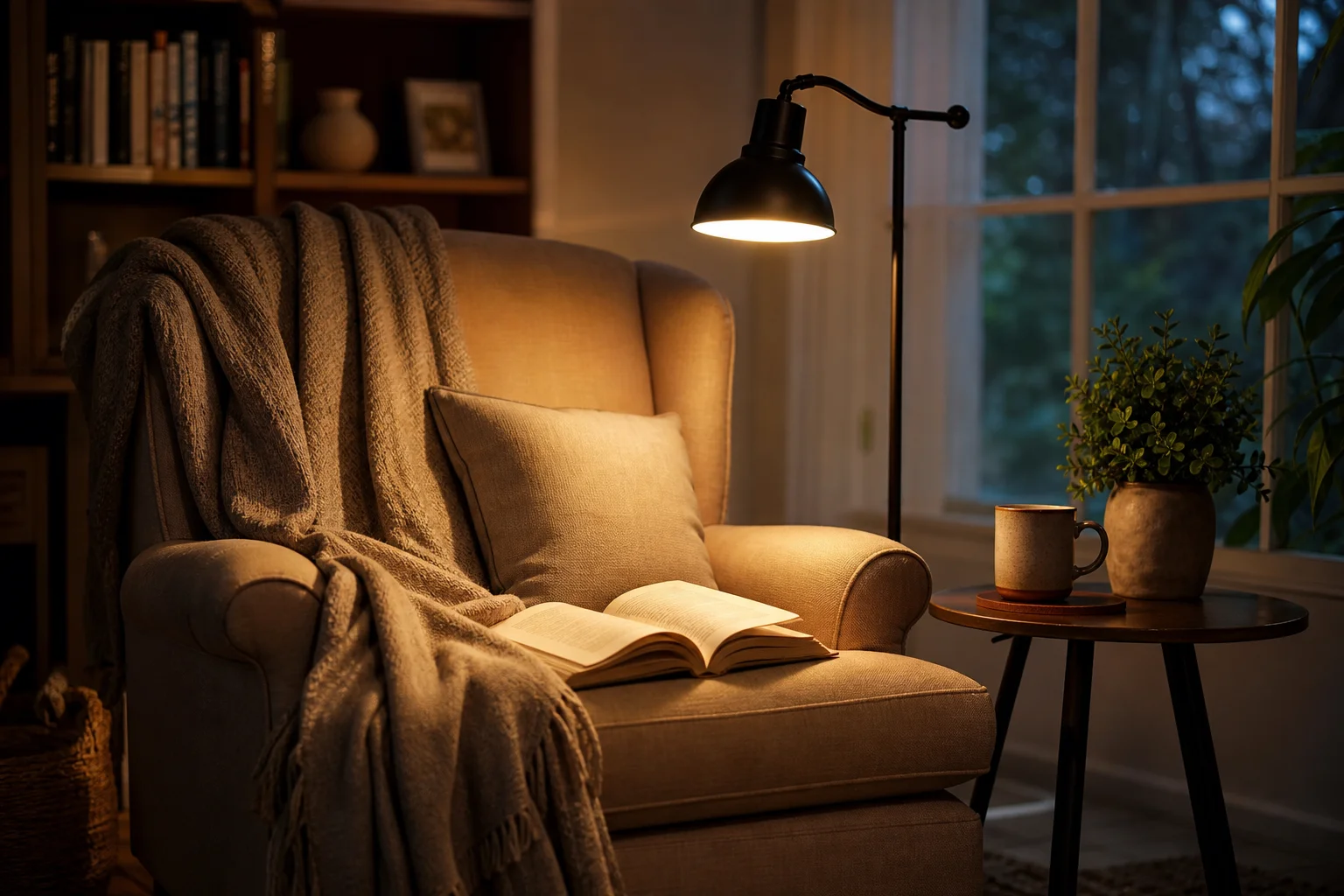
Reading light checklist
- Place the light beside and slightly behind your shoulder.
- Aim for roughly 450–800 lumens for one reader.
- Choose about 2700K–3000K for comfort and clarity.
- Screen the bulb and avoid reflections on the page.
- Use a separate light for each reader in bed.
Position the light beside and slightly behind you
For comfortable reading, place the light beside your shoulder and slightly behind it, on the side opposite the hand you turn pages with. This puts light on the page while keeping the bulb out of your direct line of sight.
The bottom of the shade is usually most comfortable around seated eye level or a little above, so the source lights the page without shining into your eyes.
Get the brightness right
Reading needs more focused light than the surrounding room. A dedicated reading lamp in the 450–800 lumen range often works well for a single reader, depending on how the shade directs the light and how far the source sits from the page.
If the page feels dim or your eyes tire quickly, increase output or move the lamp closer rather than straining. A dimmable source lets you fine-tune brightness for the time of day.
Choose a comfortable color temperature
For reading, a warm-to-neutral color around 2700K–3000K balances a relaxed feel with enough clarity to see the page comfortably. Cooler light is not automatically easier to read by; position and brightness matter more.
Keep the reading source reasonably close in color to the room’s other light so the transition does not feel jarring, especially for reading in bed at night.
Control glare and reflections
A visible bulb or a bright reflection off a glossy page or screen causes most reading discomfort. Screen the bulb with the shade, and angle the light so it does not bounce straight back off the page.
For a tablet or e-reader, reduce screen glare by lighting the room a little more evenly rather than relying only on one bright source in a dark room.
Reading in bed
For reading in bed, keep the light slightly above and beside your shoulder rather than directly in front of your face, and hide the bulb at your normal sitting angle. A decorative bedside lamp can provide atmosphere while a focused light handles close reading.
If two people share the bed, separate reading lights or adjustable arms let each person control their own light without disturbing the other.
Frequently asked questions
What is the best lighting for reading?
The best reading light is focused, glare-free, and positioned beside and slightly behind your shoulder so it lights the page without shining into your eyes. A warm-to-neutral color around 2700K–3000K balances comfort and clarity.
How many lumens do I need for reading?
A dedicated reading lamp in the 450–800 lumen range often works well for a single reader, depending on how the shade directs light and how far the source sits from the page. A dimmable source lets you fine-tune it.
Is warm or cool light better for reading?
A warm-to-neutral color around 2700K–3000K is comfortable for most reading. Cooler light is not automatically easier to read by; correct position, brightness, and glare control matter more than color alone.
Related lighting guides
- Bedside Lamp Size Guide: Height, Scale, and Placement
- Ambient Lighting vs. Task Lighting
- Warm vs. Cool Light for a Bedroom
Guidance is based on established residential-lighting conventions. Verify room measurements, local requirements, and product instructions before installation or use.