Living Room Lighting Ideas and How to Layer Them
Layer living room lighting with ambient, task, and accent sources, using floor lamps, table lamps, and dimming for a warm, flexible, comfortable space.
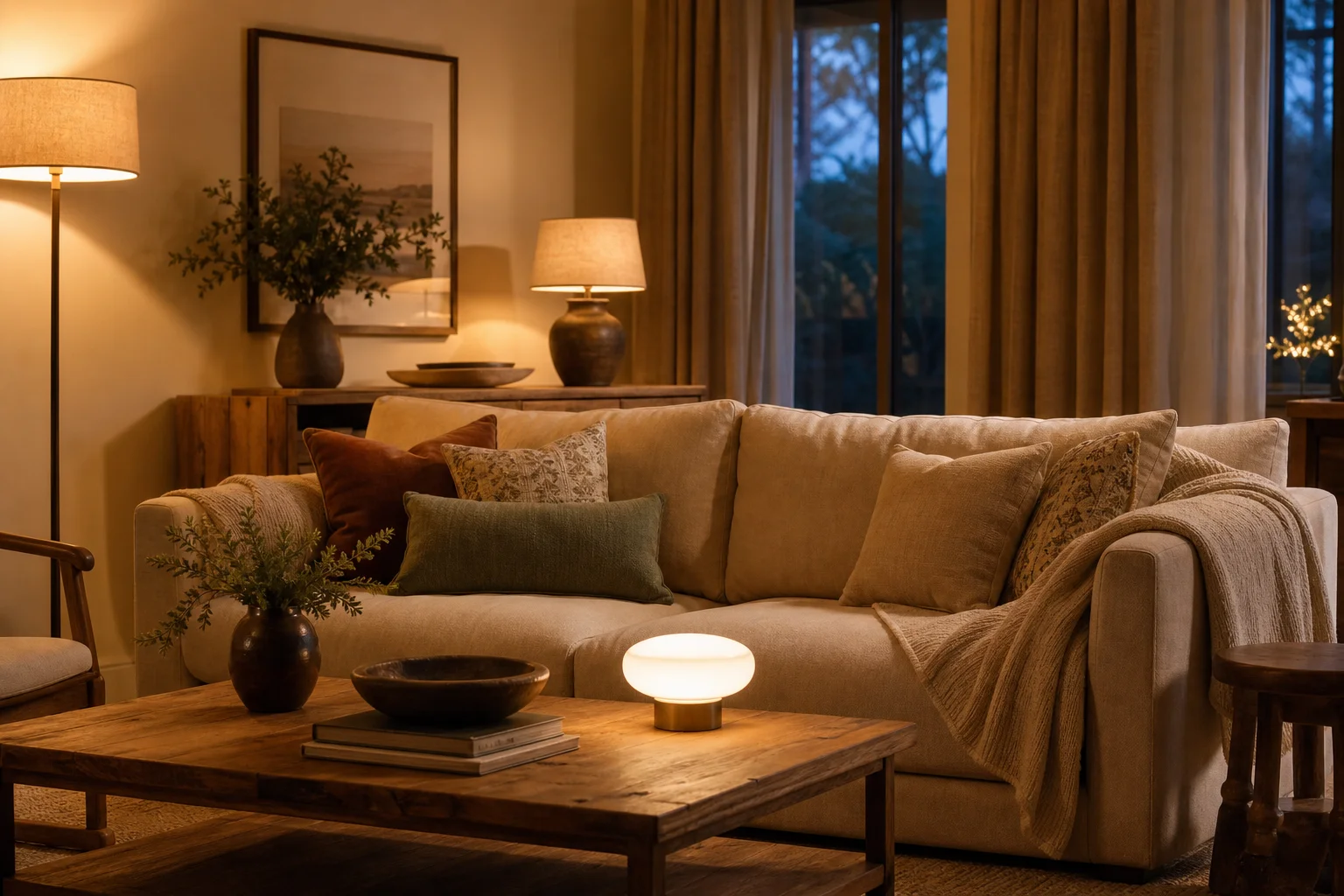
Living room lighting checklist
- Combine ambient, task, and accent layers.
- Use several moderate sources at different heights.
- Add focused light beside reading and seating.
- Include a low, warm accent light for the evening.
- Put the main sources on dimmers.
Start with three layers
A comfortable living room usually combines three layers: ambient light for overall brightness, task light for reading or work, and accent light that adds warmth and highlights features. Relying on one ceiling fixture flattens the room and creates glare.
Aim for several moderate sources at different heights rather than a single bright one, so you can adjust the mood without over-lighting the whole room.
Build a soft ambient base
Use a mix of ceiling light, floor lamps, and shaded table lamps to spread a gentle, even glow. Placing lamps in different corners fills shadows and makes the room feel balanced.
Keep bare bulbs screened from seated sightlines, and repeat one finish or light color across sources so the room feels connected.
Add task light where you use it
A reading floor lamp beside a chair or a table lamp next to the sofa gives focused light for reading, games, or hobbies without brightening the entire room. Position it beside and slightly behind the seat so the bulb stays out of view.
For a media area, place a dimmed lamp beside or behind the screen rather than where it reflects in the display.
Layer in accent and low light
A small sculptural lamp on a console, a light near a bookshelf, or a low glow in a dark corner adds depth and a finished feel. These low, warm sources are what make a living room feel cozy in the evening.
Keep the brightest point near where people sit rather than overhead, which helps the space feel settled after dark.
Put it on dimmers
Dimming is what makes a living room flexible, taking it from bright and social to soft and relaxed. Dim the brightest source first, then adjust local lamps to taste.
Use bulbs and controls rated to work together, and choose warm color temperatures around 2700K for a relaxed evening atmosphere.
Frequently asked questions
How do you layer living room lighting?
Combine three layers: ambient light for overall brightness, task light for reading beside seating, and accent light in corners and on consoles for warmth. Use several moderate sources at different heights instead of one bright ceiling fixture, and put them on dimmers.
How many lamps should a living room have?
Most living rooms feel balanced with at least two or three light sources beyond the ceiling fixture, such as a floor lamp near a reading chair and table lamps on either side of the seating. Spread them so no corner stays dark.
What color light is best for a living room?
A warm color around 2700K suits a relaxed living room in the evening. Pair it with dimming so you can brighten for social time and soften for winding down, and keep nearby sources in a similar color range.
Related lighting guides
- Ambient Lighting vs. Task Lighting
- Floor Lamp Placement in a Living Room
- How Many Lumens Do You Need? A Room-by-Room Guide
Guidance is based on established residential-lighting conventions. Verify room measurements, local requirements, and product instructions before installation or use.