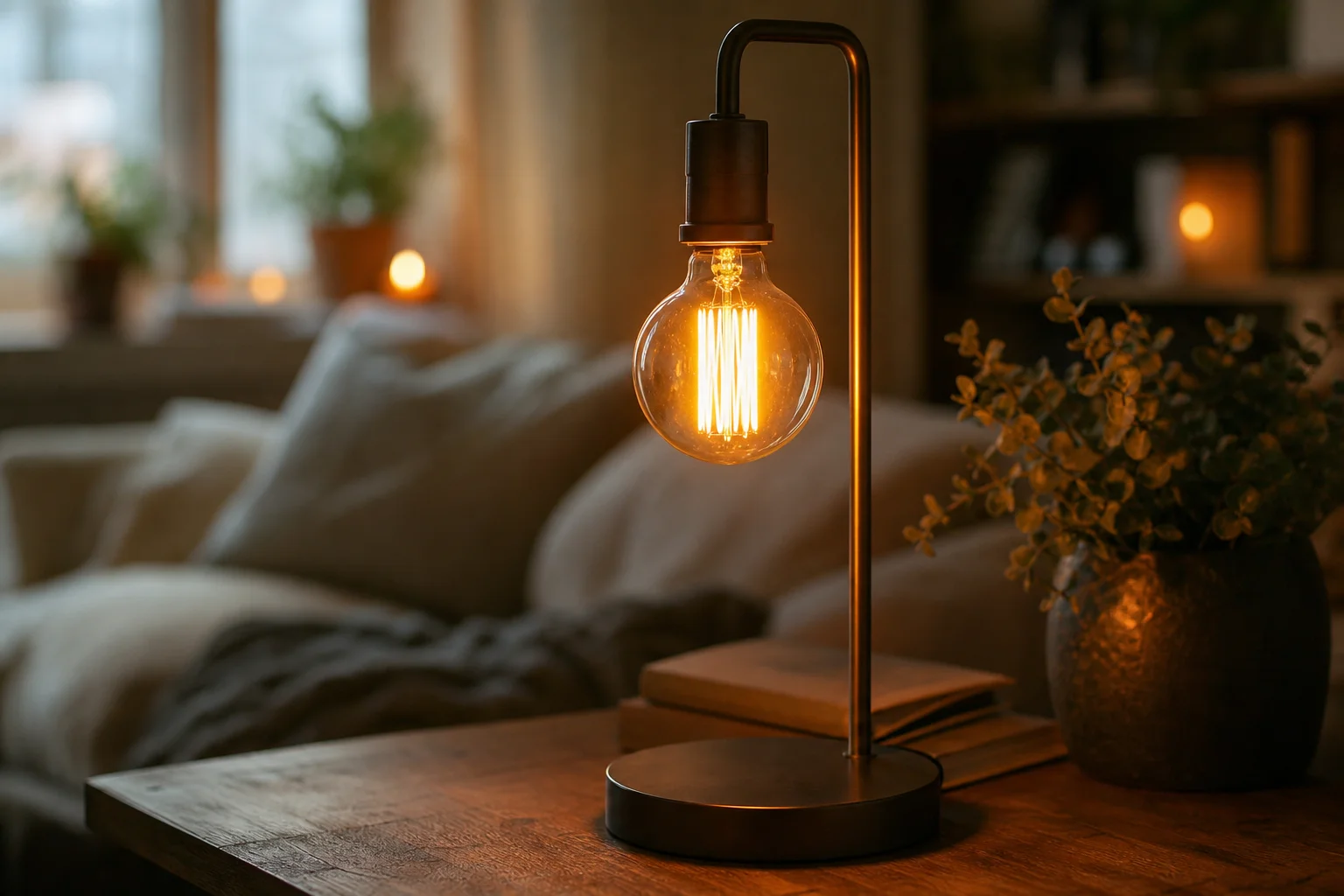
Table Lamp vs Floor Lamp: Which One Does Your Room Actually Need?
Most rooms are underlit, and the fix is almost never a brighter ceiling light. It is a table lamp, a floor lamp, or both. The question is which one belongs where — and that comes down to surfaces, seating and how much floor you can spare.
The short answer
- Choose a table lamp when you already have a surface — nightstand, side table, console, sideboard, desk, shelf — and you want a soft pool of light at seated height.
- Choose a floor lamp when there is no surface, when you need to light a corner or reach over a sofa, or when floor space is available but table space is not.
- Choose both in any room you use after dark. Layered light at two different heights is what makes a room feel designed rather than merely lit.
What a table lamp does better
1. It lights at the right height for sitting
A table lamp puts light roughly at eye and shoulder level for a seated person. That is exactly where you want it for reading, conversation and anything that involves your hands. Ceiling light comes from above and flattens faces; a table lamp lights them warmly from the side.
2. It creates intimacy
A table lamp draws a defined circle of light. Two or three of these circles in a living room create the pockets of warmth that make a space feel calm at night. One overhead fixture cannot do this, no matter how good the bulb.
3. It doubles as an object
A lamp is furniture you look at even when it is switched off. A sculptural base on a console or a mushroom-shaped lamp on a shelf earns its place visually all day, which a plain floor lamp rarely does.
4. It fits small rooms
In a studio, dorm or small bedroom, floor area is the scarce resource. A compact table lamp on an existing surface costs you nothing in floor space. That is why our small space lamps are almost all table lamps.
What a floor lamp does better
1. It works with no surface at all
Reading chair in a corner, no side table? A floor lamp is the only option. It brings the light to the seat without adding furniture.
2. It reaches over and across
Arc and swing-arm floor lamps extend light over a sofa or bed, putting it exactly where a table lamp cannot reach.
3. It lights vertical space
An uplight floor lamp bounces light off the ceiling and lifts a whole room. Table lamps light the lower third of a space; floor lamps can light the upper two thirds.
4. It fills dead corners
Every room has one dark corner that makes the whole space feel smaller. A floor lamp fixes it for the price of one fixture.
Room by room: what to use where
Bedroom
Table lamps win. A pair on the nightstands gives symmetry, independent control for two people, and reading light exactly where you need it. Add a floor lamp only if there is a reading chair, or if the room is large and the corners go dark. Get the height right first — see our table lamp sizing guide for the exact numbers.
Living room
Both, and this is not a luxury. The standard scheme professionals use: a table lamp on each side table for warmth at seated height, plus one floor lamp in the corner or behind the main chair for lift and reach. Three to four light sources at different heights, all on warm 2700K bulbs, all dimmable if possible.
Home office or desk
A table lamp — specifically a task lamp — beats a floor lamp every time, because you need light on the work surface, not the room. Aim for the shade bottom 14 to 18 inches above the desktop.
Entryway or hallway
Table lamp on a console, no contest. It is the cheapest way to make an entryway feel like a room rather than a corridor. A floor lamp in a narrow hall is a tripping hazard.
Nursery or kids' room
A table lamp on a high shelf or dresser, with the cord managed and out of reach, gives you soft night-time light. Floor lamps get pulled over.
Dining room
Neither is primary — the pendant over the table does the work. But a table lamp on a sideboard at low brightness is the trick restaurants use to make an evening room feel warm.
How many lamps does a room need?
The working rule is at least three light sources in any room you use in the evening, at different heights. In a living room that might be: a ceiling fixture on a dimmer, two table lamps, and one floor lamp. You will rarely have them all on at once — the point is being able to choose the mood.
If you can only add one thing to a room right now, add a table lamp. It is the cheapest, most flexible upgrade in lighting, and it needs no wiring, no drilling and no electrician.
Frequently asked questions
Can a table lamp replace a ceiling light?
In a bedroom, often yes — two table lamps plus a dimmer can be all you need, and many people prefer it. In a kitchen or bathroom, no; those rooms need overhead light for safety and task work.
Is it OK to mix table lamps and floor lamps in one room?
It is what you should be doing. Keep the finishes in the same family — all warm metals, all blacks, all ceramics — and vary the heights freely.
Should table lamps in the same room match?
Lamps flanking a bed or sofa should match, or at least share one strong trait. Lamps on opposite sides of a room do not need to match at all.
Which is cheaper to run, a table lamp or a floor lamp?
Practically identical with LED bulbs — a few dollars a year either way. Brightness and hours of use matter far more than the lamp type. See our guide to lumens, watts and bulb colour.
Start with the surfaces you already have
Walk your rooms after dark and note every surface next to a seat that has no lamp on it. That list is your shopping list. Browse the full Lumière Home lamp collection, or start with the dimmable mushroom table lamp for the corners and shelves that need warmth more than output.
Written by Lumière Home