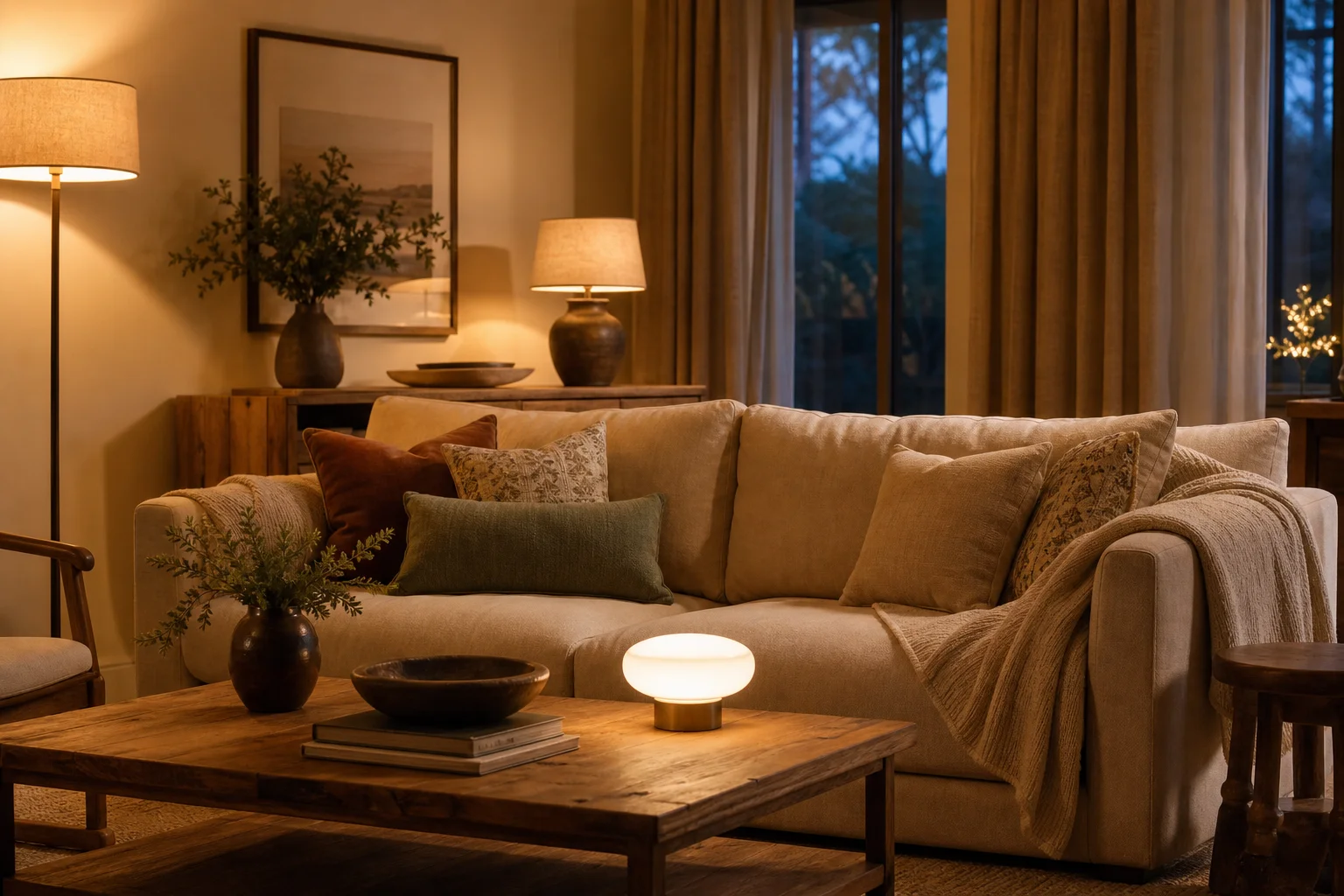
How Bright Should a Table Lamp Be? Lumens, Watts and Color Temperature Explained
The short answer: most table lamps should use a bulb between 400 and 800 lumens. Choose 400 to 450 lumens for bedside and mood lighting, 600 to 800 lumens for reading and living room use, and 800 to 1,100 lumens for a desk or work surface. Pair that with a warm color temperature of 2700K for living spaces and bedrooms.
Brightness is where most people get lamp shopping wrong, and it is not their fault — the industry spent a century measuring light in watts and then switched to lumens without explaining it well. Here is what the numbers actually mean and which ones to buy.
Lumens vs watts: what the numbers mean
Lumens measure light output. This is the number you should shop by. More lumens means a brighter lamp.
Watts measure energy consumption. With old incandescent bulbs, wattage happened to be a decent proxy for brightness, so everyone learned to think in 40W and 60W. LED bulbs produce the same light for a fraction of the energy, which broke that shorthand completely.
Conversion chart: old watts to lumens
| Old incandescent | Lumens | Equivalent LED watts |
|---|---|---|
| 25W | ~250 lm | 3–4W |
| 40W | ~450 lm | 5–6W |
| 60W | ~800 lm | 7–9W |
| 75W | ~1,100 lm | 10–12W |
| 100W | ~1,600 lm | 14–16W |
So when a lamp says "60W max," it is telling you the socket's electrical limit, not the brightness you should aim for. With an LED you can hit that same 800-lumen output while drawing only 8 watts — comfortably inside the limit and running far cooler, which also protects the shade and the lamp's finish over time.
How many lumens for a table lamp, by use
Bedside table lamp: 400–450 lumens
A nightstand lamp has a specific job — enough light to read by without waking anyone or wrecking your ability to fall asleep. 450 lumens on a dimmable bulb is the sweet spot. If you read in bed for long stretches, go to 600 lumens but make sure it dims, because you want to drop that light right down in the last twenty minutes before sleep.
Living room table lamp: 600–800 lumens
Living room table lamps are usually part of a layered scheme rather than the only light source, which means each individual lamp does not need to be bright. Two 700-lumen table lamps at opposite ends of a room produce far more pleasant light than one 1,600-lumen ceiling fixture. This is the single biggest upgrade you can make to how a living room feels at night.
Desk lamp: 800–1,100 lumens
Task lighting needs real output. Detailed work — writing, crafts, anything with small print — benefits from 1,000 lumens or more, positioned close to the surface and angled to avoid glare on a screen.
Console, entryway and accent lamps: 300–500 lumens
Accent lamps are there to create a glow and mark a transition, not to illuminate a task. Keep these lower — an over-bright entryway lamp is harsh the moment you walk in from a dark street.
Color temperature: the number that matters more than brightness
Color temperature is measured in Kelvin and determines whether light reads as warm and golden or cool and blue-white. For a home, this single setting affects the mood of a room more than lumens do.
| Kelvin | Appearance | Best for |
|---|---|---|
| 2200K | Amber, candlelit | Late-evening accent lamps, dimmed bedside |
| 2700K | Warm white | Living rooms, bedrooms — the default for table lamps |
| 3000K | Soft white | Kitchens, bathrooms, dressing areas |
| 4000K | Neutral white | Task lighting, garages, workshops |
| 5000K+ | Daylight, blue-white | Rarely right in a living space |
If you take one thing from this guide: put 2700K bulbs in your table lamps. Daylight bulbs in a bedside lamp are the reason some bedrooms feel like a waiting room no matter how nice the furniture is.
Mixing color temperatures is the real mistake
You can mix lamp styles, materials, metals and eras freely. What you cannot mix is color temperature within one sightline. If one table lamp is 2700K and the other is 4000K, the room will feel subtly wrong and most people cannot identify why. Check the Kelvin rating on every bulb in a room and make them match.
Why dimmable matters more than maximum brightness
A dimmable table lamp is functionally several lamps in one. At full output it is a reading light; at 20 percent it is ambient evening glow. Given the choice between a brighter fixed lamp and a slightly dimmer dimmable one, take the dimmable every time.
Two things to check: the bulb must be labeled dimmable (not all LEDs are), and the lamp needs either an integrated dimmer, a touch control, or a dimmer-compatible switch. Some LED bulbs also shift slightly warmer as they dim, which mimics an incandescent and is very pleasant in a bedside lamp — this is sometimes marketed as "warm dim" or "dim to warm."
Two more specs worth checking
CRI (Color Rendering Index) measures how accurately a bulb renders color, on a scale to 100. Below 80 and skin tones look sallow and fabrics look flat. Look for CRI 90 or higher in living rooms and bedrooms — it is the difference between a room looking rich and looking cheap, and it costs almost nothing extra.
Beam spread and shade material change perceived brightness dramatically. A 600-lumen bulb inside a dense fabric or opal glass shade will feel far softer than the same bulb under an open metal shade. If you are choosing between shades, read our guide on lampshade materials before settling on a bulb.
Frequently asked questions
How many lumens should a bedside table lamp be?
Around 400 to 450 lumens, on a dimmable warm-white bulb. Increase to 600 lumens if you read in bed regularly, but keep it dimmable so you can wind the light down before sleep.
Is 800 lumens bright enough for a table lamp?
Yes — 800 lumens is roughly the old 60W incandescent and is bright enough for comfortable reading in a living room or bedroom. It is generally more than you need for a purely decorative accent lamp.
What wattage bulb should I use in a table lamp?
Shop by lumens, not watts, then check that the bulb's wattage falls under the lamp's maximum rating. An LED between 6 and 10 watts covers almost every table lamp need and stays far below typical socket limits.
What is the best color temperature for a table lamp?
2700K warm white for living rooms and bedrooms. Move to 3000K in bathrooms and kitchens. Avoid anything at 4000K or above in a relaxing space.
Can I put an LED bulb in an older table lamp?
In almost all cases yes, provided the base type matches and the wattage sits under the lamp's rating. LEDs run much cooler than incandescents, which is easier on the socket and the shade. If the lamp has a built-in dimmer, buy a dimmable LED specifically.
Why does my table lamp look dimmer than expected?
Usually the shade. Dark, lined or heavily textured shades can absorb a large share of the output. Bulb placement matters too — a bulb sitting too low inside a shade throws most of its light down at the table rather than into the room.
Do brighter bulbs use more electricity?
With LEDs the difference is trivial. Going from 450 to 800 lumens costs a few extra watts, which over a year of evening use amounts to very little. Choose the brightness that suits the room, not the one that seems most efficient.
Looking for a lamp that handles both jobs? Our dimmable mushroom table lamp runs warm and dims low for bedside use. You can also read our room-by-room table lamp sizing guide or browse the full lighting collection.
Written by Lumière Home